
Credit quiz
Test your credit knowledge
How do you get a good credit score when you don’t know the rules? It’s even harder when you’ve been told the wrong ones. Answer each question for yourself, then open it to check.
21 questions
How well do you know the rules of credit?
Some answers surprise even people who work with credit every day. Keep score as you go.
1. How many major credit bureaus are there in the U.S.?
There are approximately 1,900 credit bureaus in the U.S., but only three major bureaus: Equifax, Experian and TransUnion.
2. A credit score is often referred to as a ________ score.
A credit score is often referred to as a Fair Isaac, or FICO, score.
3. True or false: closing a credit card account will raise my credit score.
False. Closing a credit card account often lowers your available credit, which raises your utilization ratio, and it can lower the average age of your accounts. Older accounts show stability and that you can handle credit wisely.
4. When reviewing credit, a mortgage underwriter looks at: (A) an average of your credit scores, (B) your highest credit score, (C) your lowest credit score or (D) your middle credit score?
D) Your middle credit score from Equifax, Experian and TransUnion.
5. True or false: credit scores do not affect insurance rates.
False. A low credit score may increase your property and casualty insurance rates (home and car), though not your life insurance rates. Property and casualty insurers consider people with lower scores to be greater insurance risks and more likely to file frivolous claims. So “if you don’t know insurance, know your insurance agent.”
6. True or false: your credit score is not affected by your income.
True. A credit score does not consider income or occupation. Still, a person with a high FICO score and minimal income will likely not qualify for a large mortgage or an unsecured bank loan.
7. True or false: by law, a collection agency is required to report a collection account on your credit report for 7 years, then remove it.
False. By law, a collection account can stay on a credit report for up to seven years, but there is no minimum.
8. True or false: opening a new account (under one year old, with no adverse information) will likely lower your credit score.
True. Opening a new account will often lower your credit score and lower the average age of your accounts. Applying for too many accounts can be a sign of financial problems. Very few bankers are fired for not making a loan; they are fired for making a bad one. It is better to raise the credit limit on your revolving accounts than to apply for new ones.
9. True or false: if you lose your wallet or purse, it is better to lose a debit card than a Visa or Mastercard with a high limit.
False. It is better to lose the Visa or Mastercard, because your liability is limited to $50. With a debit card, you can lose everything in your checking or savings account.
10. My Equifax credit score is ____. My Experian credit score is ____. My TransUnion credit score is ____.
You should know all three scores, since different lenders use different credit bureaus to evaluate your credit. Check your own credit report twice a year, not only to know your scores but to monitor activity on your accounts: credit cards opened or closed, unauthorized activity, unknown charges, new bank accounts, past-due payments, accounts over the limit and signs of identity theft.
11. Approximately how many credit bureaus are in the U.S.? (A) 3 to 4, (B) 5 to 10, (C) between 500 and 1,000 or (D) over 1,500?
D) Over 1,500. There are approximately 1,900 credit agencies in the U.S. All of them buy their information from the “Big 3” and often tailor it to a specific industry, such as auto dealerships, mortgage lenders or department stores.
12. Which size collection account concerns a banker more? (A) $50, (B) $500, (C) $2,500 or (D) all of the above?
A) $50. A banker is typically more concerned about a small unpaid debt than a large one. Not paying a small debt is considered a choice. Wanting to pay a large debt but not having the ability to pay is considered a condition. If you have the ability to pay, bankers will often write WNC (willful non-compliance) next to small accounts.
13. True or false: credit ratings and FICO scores do not affect employment.
False. A low credit score can eliminate an applicant from consideration for a job, and this is considered legal discrimination. The thinking: if applicants cannot handle their own finances, why trust them with clients’ money? And even in roles that do not handle money, such as marketing or sales, an employee worried about the mortgage, rent or car payment may be distracted from the job.
14. FICO scores increase when you bring your credit card balances below certain percentages of the limit. What are those percentages?
FICO scores get a medium-size increase when a credit card balance is under 50% of its credit limit. The largest increase comes when the balance is under 30%, and there is a minor increase under 10%.
15. FICO scores are based on five primary categories that add up to 100%. What is the percentage for payment history, utilization, mix of accounts, time open and new credit?
The five primary factors are payment history (35%), credit utilization (30%), time open (15%), mix of credit (10%) and new credit (10%), and there are subcategories within each. It is easier to go from no FICO score to 600 than it is to go from 600 to 700!
16. Name the sixth biggest factor that impacts your FICO score.
Inquiries. Too many inquiries can cause your credit score to drop 10 to 50 points or more in a single day.
17. True or false: old adverse items (accounts that have been on your report a long time) harm your credit more than new ones.
False. All adverse accounts harm your credit, but new items (0 to 24 months old) are more damaging than older ones, because they are weighed more heavily.
18. What is the difference between FICO scoring and Credit Karma scoring?
FICO (Fair Isaac Corporation) scoring is what over 90% of banks, mortgage lenders, department stores, auto dealerships and credit card companies use to make decisions. Credit Karma provides its members a VantageScore 3.0 score for free, which is a different scoring model from the FICO score most lenders use.
19. True or false: paying an old collection account harms your credit.
False. Paying it improperly is what harms your credit rating. Never pay a collection without a written agreement, and never pay with a credit card, a debit card, over the phone, with a cashier’s check or with a money order. For your protection, send a personal check with a restrictive endorsement.
20. Name the four major credit bureaus.
The Big 3 are Equifax, Experian and TransUnion. LexisNexis is the fourth, and is used by the other bureaus to report public records such as bankruptcies, judgments and tax liens.
21. When is it a good idea to take your credit card to 80% or 90% of the available credit (without going over the limit)?
When a new credit card is issued, often at a very low or zero APR. Using it frequently shows you deserve a high credit limit and can handle credit wisely. Then bring the balance down under 30% to maintain your FICO score.
Keep learning
Learn how to establish, re-establish or maintain your credit
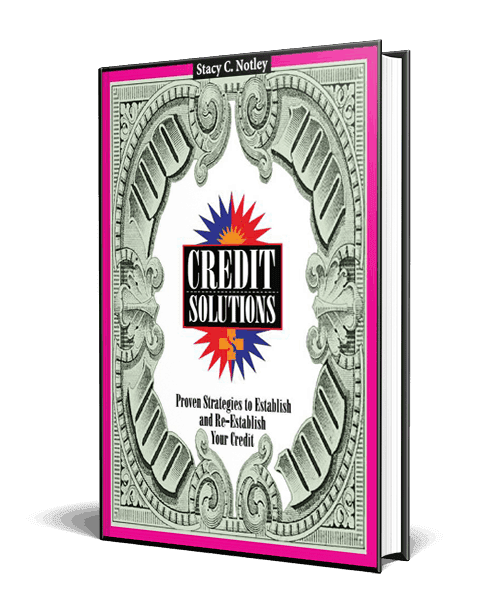
Stacy C. Notley’s book, Credit Solutions, covers credit from A to Z. Or see the rules in action at the Comedy Credit Clinic.
Do you have a question about credit or debt management? Ask the experts. Start with a free 15-minute credit analysis.
The Manning Group, Inc. · Since 1983
Don’t leave good credit to chance. Leave it to us.
Start with a free 15-minute credit analysis. No pressure, and no false promises: just a clear look at where you stand and what it will take.
Or call (972) 458-9100 · toll free (888) 458-9100